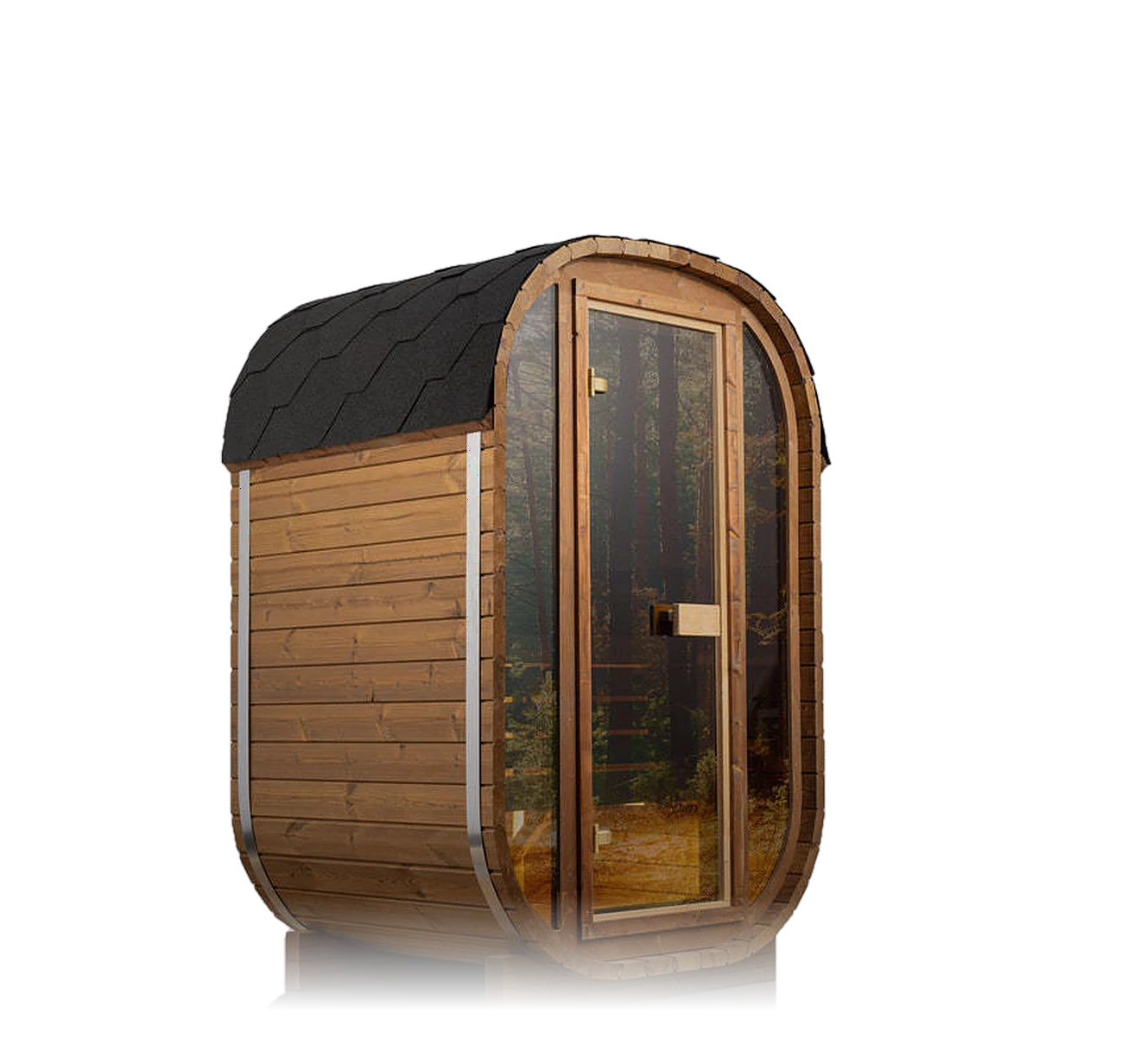
Infrared Sauna vs Traditional Sauna
These are two different appliances that share a name, and confusing them is the most consequential mistake in this category — not because one is better, but because most of the research people cite for one was conducted on the other.
How each one heats you
A traditional sauna heats the air with a stove, typically to somewhere between 160°F and 200°F, and water can be poured on hot stones to raise humidity. You are warmed by the hot air around you.
An infrared cabin uses emitters that warm your body more directly, at a much lower air temperature — commonly around 120°F to 150°F. The room is cooler; you still sweat.
The practical differences
- Tolerance. Many people find a longer session easier in an infrared cabin because the air is not as hot.
- Heat-up time. Infrared cabins generally reach operating temperature faster, which matters on a weekday evening.
- Humidity. Traditional saunas can be run wet; infrared cabins are dry, which changes the room’s moisture requirements.
- Electrical demand. Traditional stoves frequently need a substantial dedicated supply. Infrared cabins vary widely — smaller units may run on a standard circuit, larger and full-spectrum cabins often do not.
- Installation. Infrared cabins are usually modular panels assembled in place, which is easier to retrofit into an existing room.
The evidence point that matters
The widely cited sauna research — the Finnish cohort studies and the systematic reviews built on them — studied traditional sauna bathing. Evidence suggests a consistent physiological response to repeated heat exposure, but the infrared-specific literature is much smaller, older, and conducted on a limited number of systems. When a retailer quotes a headline sauna finding on an infrared product page, that is a transfer the research does not support.
This does not mean infrared cabins do nothing. It means the honest claim is narrower than the marketing usually makes it.
Which should you buy
If you want high heat, humidity, and the traditional experience, and you can supply the electrical demand and the room, buy traditional. If you want lower-temperature sessions, faster heat-up, and a simpler retrofit, buy infrared. Neither choice is a compromise; they are different products.
Before you decide
Confirm the electrical requirement in writing for whichever you choose, and have a licensed electrician verify your panel. This is the most common reason a sauna installation stalls.
The infrared sauna buying guide covers emitter layout, cabin sizing, and installation requirements. The underlying studies are listed under sauna in the Research Library, and pairing heat with cold is covered in contrast recovery.
Information provided by IMPERVITA is for educational and general wellness purposes and is not intended to replace professional medical advice, diagnosis, or treatment.
Ready to compare actual cabins? See home saunas for both heat types side by side, and what each one needs from your home.