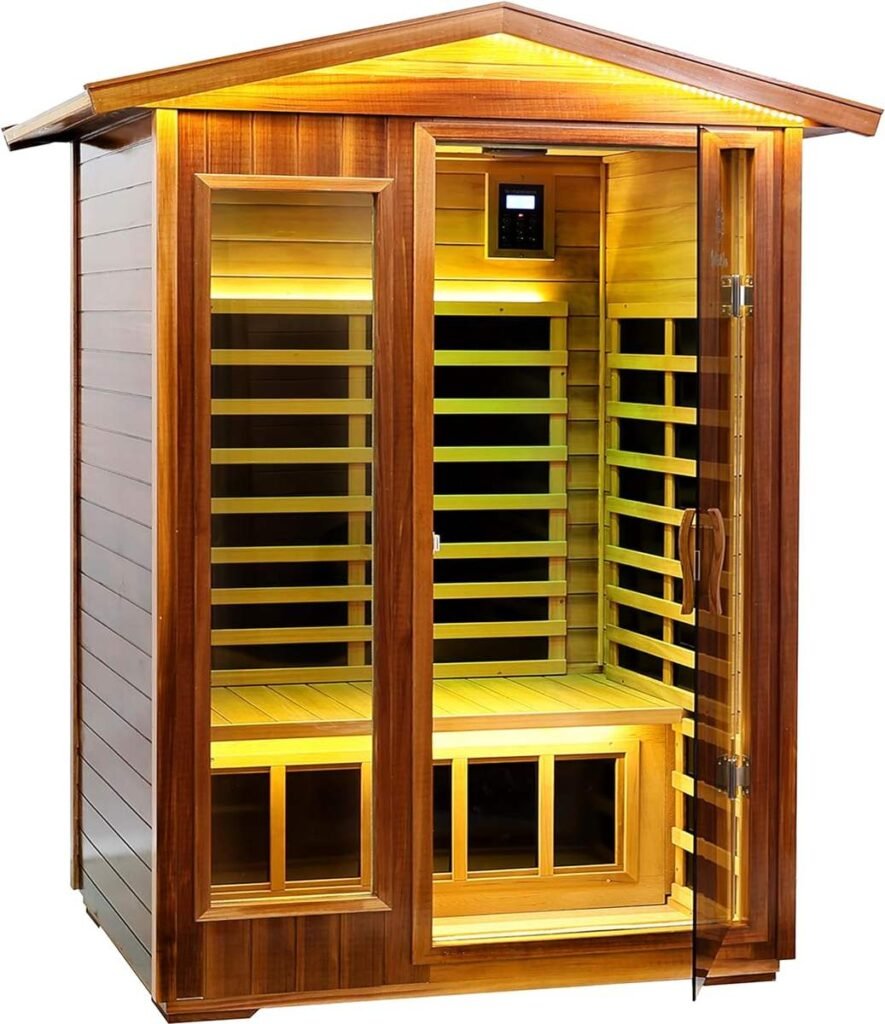
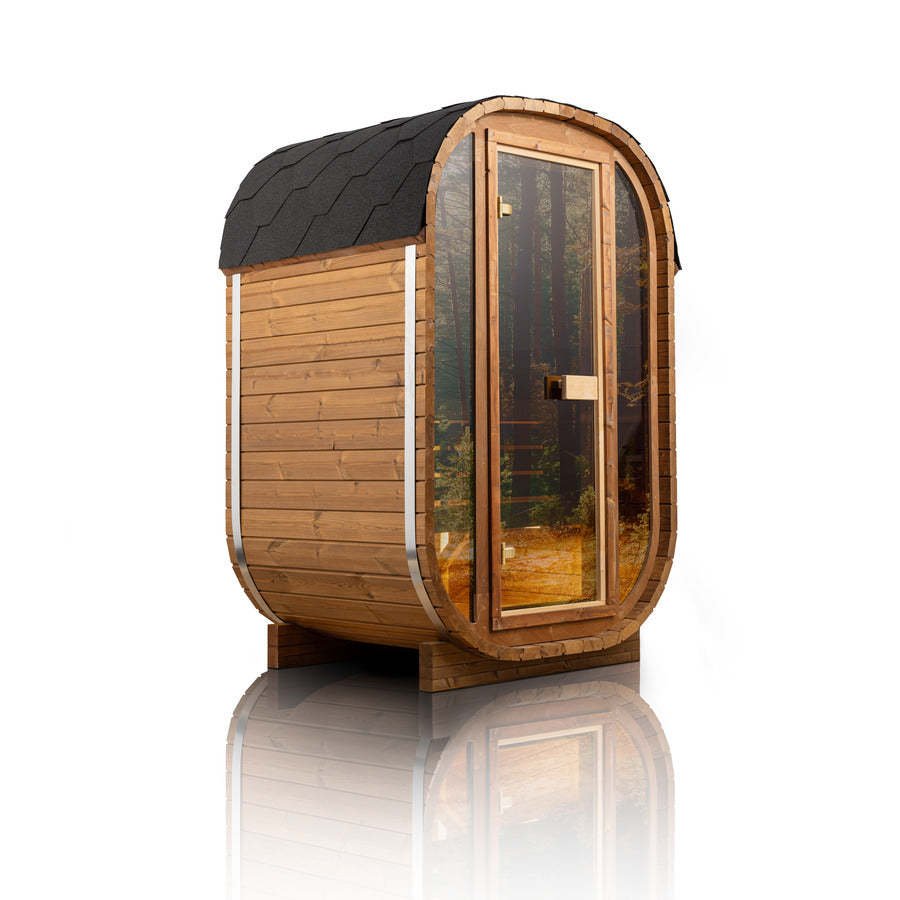
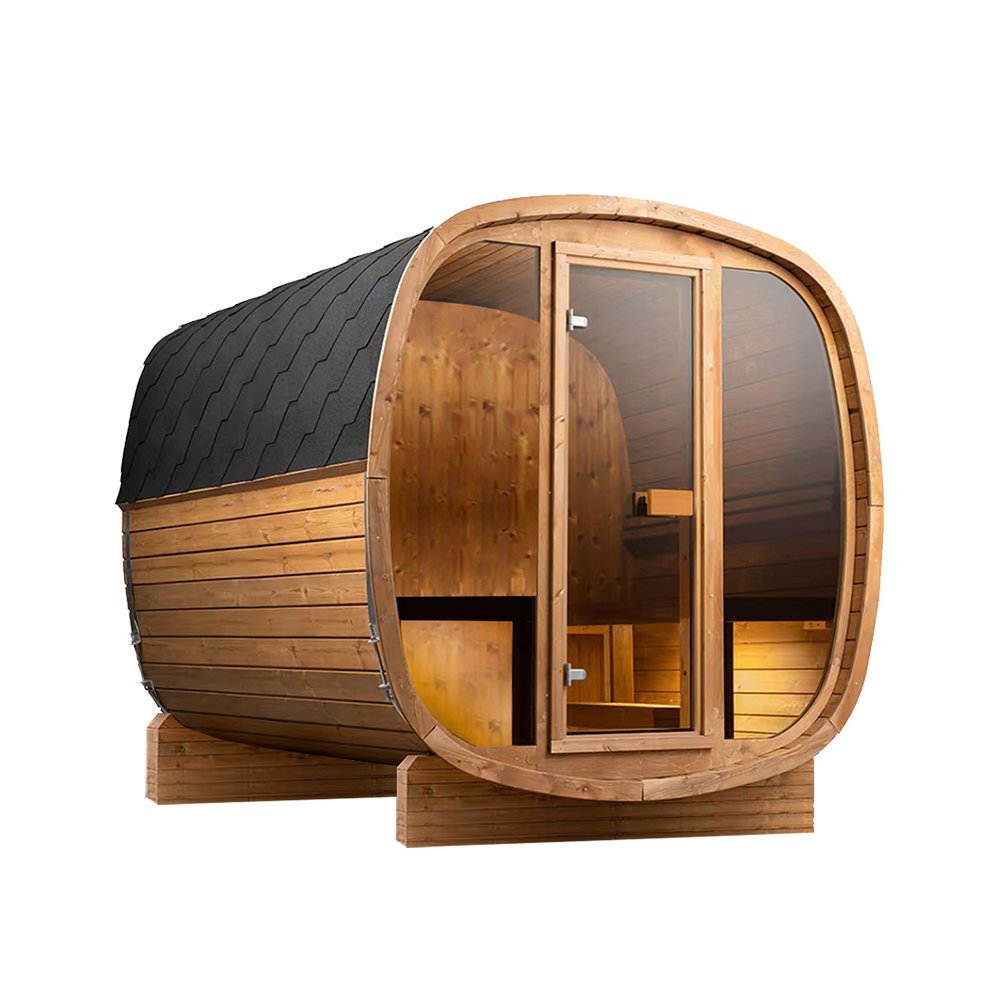
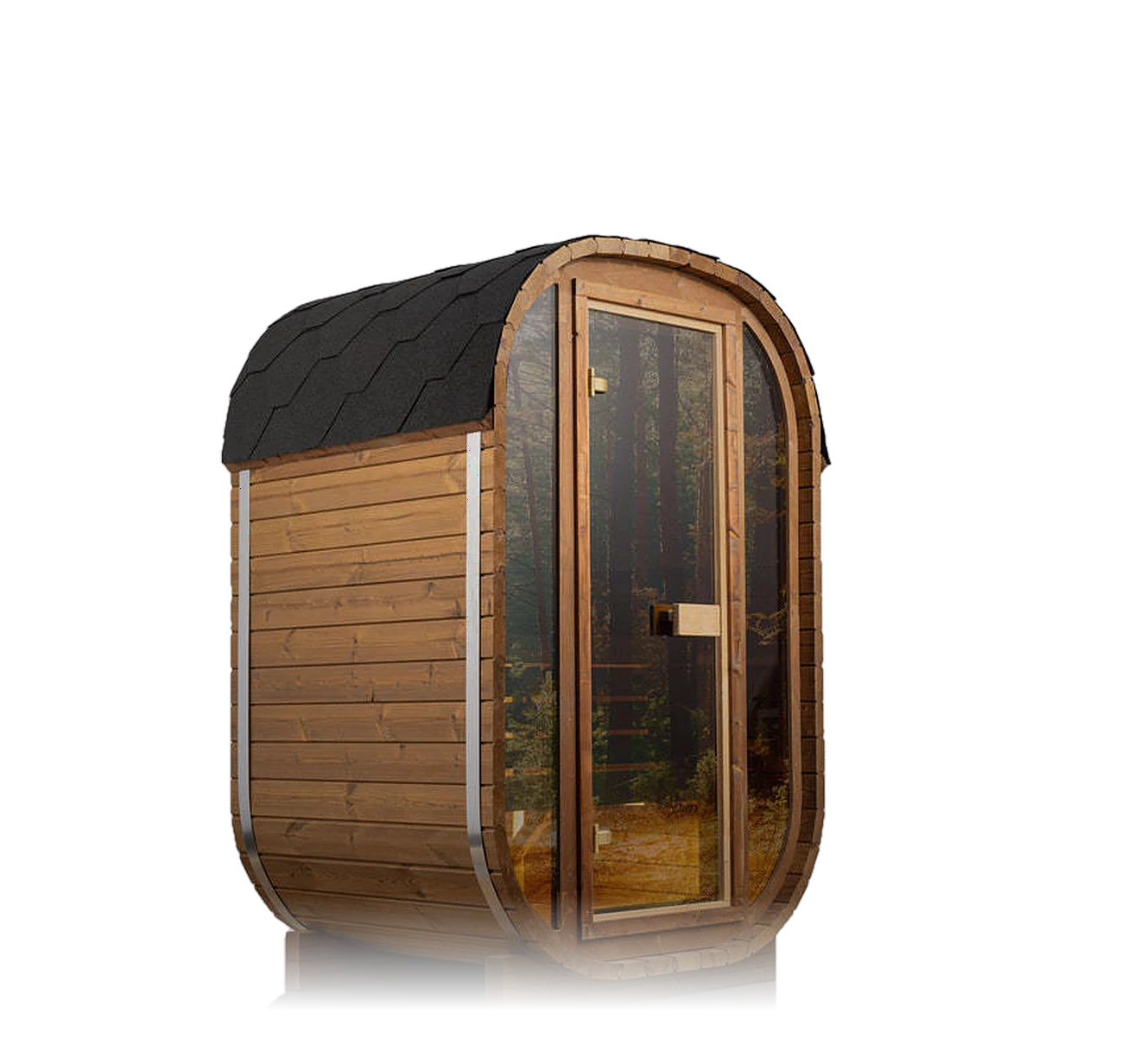
An outdoor sauna is a small building before it is an appliance. The cabin is the part buyers compare and the part that matters least: what decides whether the project succeeds is the base it stands on, the supply that reaches it, and whether the heat type you chose is the one you actually wanted.
Two cabins that look almost identical in a photograph can be entirely different purchases. One heats a bed of stones with a stove and lets you pour water for steam; the other warms you with infrared emitters and cannot make steam at all. Both are sold as outdoor saunas. The comparisons below start there, because getting the heat type wrong is the single decision that cannot be corrected later.
Why buyers consider Outdoor & Traditional Saunas
- Putting the sauna outside keeps a large, hot, humid appliance out of a room that was doing another job, which is usually the constraint that stalls an indoor installation.
- A traditional heater-and-stones cabin produces the humid heat and the steam burst that most people mean when they say sauna. An infrared cabin cannot produce steam at any setting.
- The bulk of the widely cited sauna research studied traditional Finnish saunas rather than infrared cabins, so for this category the published evidence is more directly applicable than it is for infrared.
- Outdoor siting removes the ventilation and moisture problems an indoor cabin pushes into the surrounding room, and it puts the cold rinse or plunge a few steps away rather than through the house.
- A cabin that seats three or four turns a session into something a household does together instead of in shifts, which is usually what decides whether it stays in regular use.
What to compare before buying
- Traditional heat versus infrared, outdoors
- This is the first decision and the one that changes everything downstream. A traditional sauna holds a bed of stones at temperature with an electric or wood-burning heater; the cabin reaches much higher air temperatures and water poured on the stones lifts humidity for a short, sharper burst. An outdoor-rated infrared cabin runs cooler and drier, warms the body directly, and needs a smaller electrical supply. Neither is better. They are different appliances that happen to share a shape, and the electrical work, the heat-up time and the session itself all differ.
- Electric versus wood-burning
- Electric heaters are the common case: predictable, thermostatically controlled, and dependent on a suitable outdoor circuit. Wood-burning removes the electrical demand and adds a flue, a fire-safety clearance, fuel storage, ash handling and in many jurisdictions a permit. Manufacturers frequently offer wood-burning as a configuration on request rather than a stocked option, so confirm availability in writing before you plan around it.
- The base, not the cabin
- Every outdoor cabin needs a prepared, level base capable of carrying the assembled weight plus occupants and water. A gravel pad, concrete slab, or engineered deck are the usual answers, and the requirement comes from the manufacturer rather than from preference. This is the most common cause of a delayed outdoor sauna installation and the cost most often left out of the budget.
- Capacity against footprint
- Capacity ratings describe how many people fit, not how many fit comfortably. Interior bench length and interior height are the honest measurements. Sizing up is not free outdoors: a larger cabin needs a larger base, a heavier delivery, and frequently a larger supply.
- Timber and weather exposure
- Cedar is the usual choice because it is dimensionally stable and naturally resistant to moisture cycling, which is what keeps an outdoor cabin serviceable rather than warping. Ask what the exterior finish is, whether it needs re-treating, and how often. An outdoor cabin is exposed to weather every day it is not in use.
- Outdoor rating is a specification, not a placement
- An indoor cabin sited outside will not be covered by its warranty and will not survive weather exposure. If a cabin is infrared, confirm the manufacturer rates that specific model for outdoor installation rather than assuming the range is.
The specifications that actually matter
- Heater output against cabin volume
- A heater is sized to the cabin it is heating. An underpowered heater never reaches temperature comfortably and runs constantly trying; an oversized one cycles badly. Ask for the heater kW rating and the cabin volume it is rated for, and treat a cabin sold without a stated heater specification as an open question rather than a detail.
- Electrical supply and circuit
- Traditional electric sauna heaters commonly need a dedicated higher-capacity circuit, frequently 240V, run to an outdoor location. That is an electrician job and a trenching job, and it is the specification most often discovered after delivery. Get the exact requirement in writing and have a licensed electrician confirm what your property can provide before you order.
- Assembled weight and base loading
- Ask for assembled weight rather than shipping weight, and add occupants. This number determines whether a gravel pad is sufficient or a slab is required, and whether an existing deck can carry the cabin at all.
- Delivery access and the route in
- Outdoor cabins arrive by freight to a kerbside appointment. Whether the crates can physically reach the base decides the installation. Measure gate widths, side returns, level changes, and any turn on the route before you order.
- Heat-up time
- A cabin that takes 45 minutes to reach temperature is used on weekends. One that takes 20 is used on weekdays. Heat-up time predicts how often the sauna is actually used more reliably than any other published figure.
- Flue, clearances and permits for wood-burning
- A wood-burning configuration adds a chimney, a specified clearance to combustibles, a spark arrestor in many jurisdictions, and often a permit or inspection. Confirm what your locality requires before choosing wood-burning over electric.
Space and installation
- Prepare the base first. Level, load-bearing, and drained, to the manufacturer specification rather than to judgement. Nothing else on this list matters if the base is wrong.
- Keep the manufacturer clearance on every side. It is a fire and ventilation requirement, not a styling suggestion, and it is larger for wood-burning configurations.
- Plan the route from the door to a cold rinse or plunge. A long walk in the cold is the most common reason an outdoor sauna stops being used in winter.
- Consider the approach underfoot. Bare feet on gravel, ice, or a wet deck in December decides usage more than any specification on the sheet.
- Check overhead. Wood-burning needs clear space above the flue and distance from overhanging branches and eaves.
- Think about neighbours and sightlines before siting. Privacy, and where the door faces, are worth settling before the base is poured rather than after.
Electrical, ventilation, drainage, and structural requirements
- Electrical. Confirm the exact circuit requirement before purchase and have a licensed electrician verify capacity and the outdoor run. A dedicated 240V circuit is common for traditional electric heaters and considerably more involved than an indoor plug-in cabin.
- Base and groundworks. A prepared, level, load-bearing base to the manufacturer specification, with drainage away from the cabin. Budget for this as part of the purchase, not as an afterthought.
- Fire safety. Wood-burning configurations require specified clearances to combustibles, a compliant flue, and frequently a permit or inspection. Electric heaters still require the stated clearances around the heater and bench.
- Ventilation. An outdoor cabin ventilates to open air, which removes the moisture problem an indoor cabin creates. The cabin still needs its designed inlet and outlet left unobstructed.
- Drainage. Not required by the sauna itself. If a cold plunge is going next to it, plan that drainage and its power at the same time, because retrofitting either afterwards costs more than doing both at once.
- Weather protection. Confirm what exterior treatment the manufacturer requires, how often, and whether skipping it affects the warranty.
Maintenance and sanitation
- Use bench towels and wipe benches down after each session. It is the single most effective thing you can do to extend the life of the interior.
- Leave the door ajar after use so the cabin dries rather than staying closed and damp.
- Re-treat the exterior on the manufacturer schedule. An outdoor cabin is weathering every day, including the days nobody uses it.
- Inspect the stones periodically. Sauna stones break down with repeated heat cycling and are a consumable, not a fixture.
- For wood-burning, clear ash regularly and have the flue swept on the schedule your locality or insurer requires.
- Check the base and any decking annually for movement, rot, and drainage that has stopped working.
- Clear snow and leaf litter from the clearance zone and the air inlets.
Residential versus commercial use
A residential outdoor cabin is designed for a household using it a few times a day at most. A gym, spa, hotel, or club may ask the same cabin to run continuously for ten or twelve hours with a new occupant every half hour, and residential benches, heaters, and controls are not built for that. Commercial installations also carry obligations a garden does not: accessibility, automatic shut-off timers, occupancy limits and signage, cleaning protocols between users, and in many jurisdictions inspection and a duty of care for unattended use. If anyone outside your household will use it, specify it as commercial from the outset rather than upgrading later. See IMPERVITA PRO.
Warranty and service questions to ask
- What is covered, and for how long, on each of: cabin structure, heater, stones, controller, and electrical components? These commonly carry different terms inside one warranty.
- Does outdoor installation itself affect coverage, and is any part of the warranty void if the base does not meet the specification?
- Is weather damage excluded, and what counts as weather damage versus a defect?
- Does the warranty require professional installation, and does self-assembly reduce or void it?
- Is the warranty transferable if you sell the property?
- Are replacement heaters, controllers, and door glass stocked, and for how many years after the model is discontinued?
- Who performs a warranty repair on an outdoor cabin, who pays the freight, and is the labour to fit a part covered?
- What is the exterior re-treatment requirement, and does failing to keep to it affect a structural claim?
What the evidence shows
Regular sauna bathing has been studied more extensively than most home wellness equipment, and it is worth knowing that the strongest of that work looked at traditional saunas rather than infrared cabins. A long-running Finnish cohort reported an inverse association between sauna bathing frequency and fatal cardiovascular events, and related analyses from the same cohort examined associations with dementia outcomes and with broader lifestyle factors. Systematic reviews of dry sauna bathing have looked across cardiovascular and musculoskeletal outcomes, and separate research has examined passive body heating before bed in relation to how quickly people fall asleep. Evidence suggests a consistent physiological response to repeated heat exposure, and the associations reported are generally tied to regular rather than occasional use.
Sources in the IMPERVITA Research Library:
- Association Between Sauna Bathing and Fatal Cardiovascular and All-Cause Mortality Events Laukkanen T, Khan H, Zaccardi F, Laukkanen JA · 2015
- Cardiovascular and Other Health Benefits of Sauna Bathing: A Review of the Evidence Laukkanen JA, Laukkanen T, Kunutsor SK · 2018
- Clinical Effects of Regular Dry Sauna Bathing: A Systematic Review Hussain J, Cohen M · 2018
- Sauna Bathing Is Inversely Associated With Dementia and Alzheimer’s Disease in Middle-Aged Finnish Men Laukkanen T, Kunutsor S, Kauhanen J, Laukkanen JA · 2017
- Does the Combination of Finnish Sauna Bathing and Other Lifestyle Factors Confer Additional Health Benefits? A Review of the Evidence Kunutsor SK, Laukkanen JA · 2023
- Before-Bedtime Passive Body Heating by Warm Shower or Bath to Improve Sleep: A Systematic Review and Meta-Analysis Haghayegh S, Khoshnevis S, Smolensky MH, Diller KR, Castriotta RJ · 2019
- Contrast Water Therapy and Exercise Induced Muscle Damage: A Systematic Review and Meta-Analysis Bieuzen F, Bleakley CM, Costello JT · 2013
- NFPA 70 — National Electrical Code National Fire Protection Association · Current edition
What the evidence does not establish
Association is not causation. The strongest findings here come from observational cohorts, which can show that frequent sauna users differ from infrequent ones but cannot establish that the sauna is the reason; people who use a sauna several times a week may differ in fitness, income, leisure time, and health status in ways the studies could not fully adjust for, and the cohort work is drawn largely from one population in one country. The sleep research used warm baths and showers rather than saunas. Where a cabin is infrared rather than traditional, most of the evidence above does not transfer, because the two differ in air temperature, humidity, and how heat reaches the body. None of this establishes that any sauna treats, cures, prevents, or mitigates any disease, and none of it is a reason to change a medical treatment. Heat exposure is not appropriate for everyone: anyone who is pregnant, has cardiovascular disease or low blood pressure, has a condition affecting heat tolerance, or takes medication affecting thermoregulation should speak to a physician before using a sauna. Alcohol and sauna use together carry a documented risk.
Buyer checklist
- Settle the heat type first: traditional heater-and-stones, or outdoor-rated infrared. Everything else follows from it.
- Get the exact electrical requirement in writing, and have an electrician confirm the outdoor run before ordering.
- Confirm the base specification and price the groundworks as part of the purchase.
- Measure the delivery route: gate widths, side returns, level changes, and every turn.
- Ask for assembled weight, not shipping weight, and add occupants.
- For wood-burning, confirm availability in writing and check local permit and clearance requirements first.
- Confirm the model is rated by its manufacturer for outdoor installation.
- Ask what exterior treatment is required and how often, and whether the warranty depends on it.
- Plan where the cold rinse or plunge goes before the base is prepared, not after.
- Check interior bench length and interior height against the tallest person who will use it.
Outdoor saunas are the category where the site decides the purchase. Send us the space, the access route, and the supply available, and an advisor will tell you what will actually work there, including when the honest answer is a smaller cabin or an indoor one.
Speak With a Wellness Advisor Narrow it down in four questions
Information provided by IMPERVITA is for educational and general wellness purposes and is not intended to replace professional medical advice, diagnosis, or treatment.