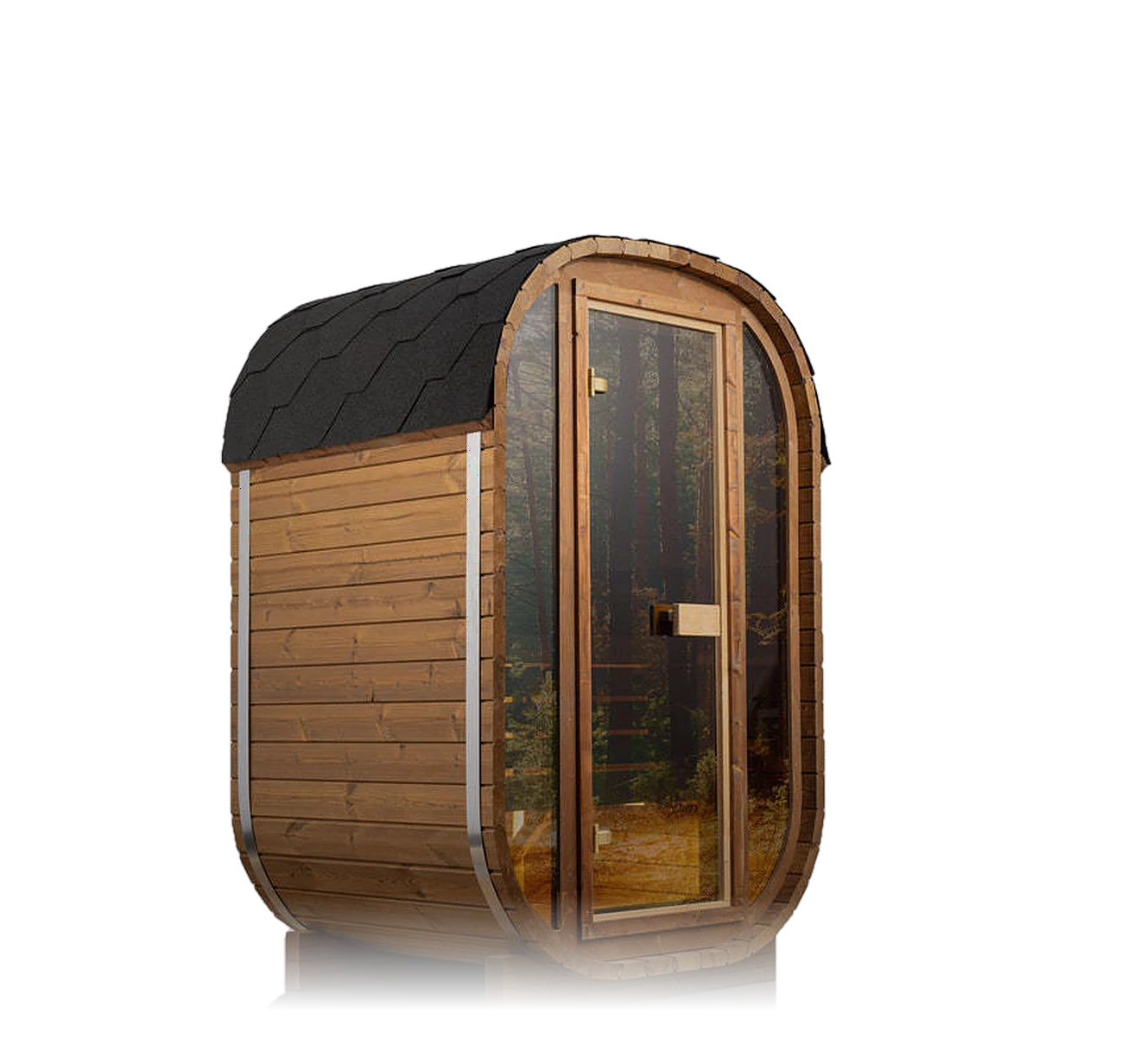
Commercial-Grade Systems
Equipment specified for duty cycle, serviceability and throughput rather than occasional household use. Commercial projects are scoped and quoted through IMPERVITA PRO at https://impervita.com/impervita-pro/
Not yet open for online ordering
Commercial-Grade Systems is not open for online ordering yet.
Equipment is listed only once its specifications, warranty terms, and service arrangements have been verified — so this page shows nothing rather than something we cannot stand behind. The buying guidance below covers what to compare. An advisor can tell you what is available today, source a specific system for a project, or record what you are looking for and tell you when it opens.
Ask an advisor about Commercial-Grade SystemsCommercial buyers are solving a different problem from a homeowner, and the specification that matters most is rarely on the front of the brochure. It is duty cycle: how many hours a day the equipment runs, how many users pass through it, and what it costs when it stops.
The most expensive mistake in commercial wellness is specifying residential equipment for a commercial floor. It is cheaper on the invoice, fails outside warranty, and takes the service offering down with it.
Why buyers consider Commercial-Grade Systems
- Recovery services increase membership value, average spend, and dwell time in facilities that already have the footfall.
- Equipment can differentiate a facility in a market where the core offering is largely undifferentiated.
- Multi-modality recovery spaces support a scheduled, bookable service rather than incidental use.
- Commercial specification protects the service: equipment that stays running is what a paid service depends on.
What to compare before buying
- Duty cycle rating
- The first question for any commercial purchase. Ask what the manufacturer rates for continuous operation and whether commercial use is permitted under the warranty at all. Many residential products explicitly exclude it.
- Throughput and turnaround
- Sessions per hour is a function of session length plus turnaround — cleaning, reset, and for cold plunges, temperature recovery. Throughput determines revenue per square foot, so it should be modelled before purchase rather than discovered afterwards.
- Serviceability
- How quickly can it be repaired, by whom, and are parts held locally? In a commercial setting downtime has a direct cost, which changes the calculation entirely compared with a home.
- Cleanability
- Surfaces must tolerate repeated cleaning with the products your protocol requires. Residential upholstery and finishes frequently do not, and they degrade visibly within months.
- Unattended versus supervised use
- Equipment used without staff present needs automatic shut-off, clear instructions, and a considered safety position. Some equipment should never be used unattended — cold plunges in particular.
- Total cost of ownership
- Purchase price, freight, installation, energy, consumables, cleaning labour, servicing, and expected replacement interval. Commercial equipment usually costs more up front and less per year of service.
The specifications that actually matter
- Continuous operation rating
- Hours per day the manufacturer rates the equipment for.
- Recovery or reset time
- What determines sessions per hour.
- Electrical load
- Per unit and aggregated across the room, which is what your panel actually sees.
- Noise level
- Aggregated across all equipment in the space, and assessed against adjacent areas.
- Service access requirement
- The clearance a technician needs, which is frequently larger than the clearance a user needs.
- Expected service life
- Under commercial duty, not residential duty.
Space and installation
- Plan the workflow before the layout: how a client enters, uses, exits, and how staff reset the space between sessions.
- Allow service access to every piece of equipment without moving anything else.
- Model peak-hour throughput and check the room supports it, including changing and waiting.
- Consider accessibility obligations, which apply to commercial premises and vary by jurisdiction.
- Plan for expansion. Retrofitting drainage or a circuit after opening costs multiples of installing it during fit-out.
Electrical, ventilation, drainage, and structural requirements
- Electrical. Aggregate the load across all equipment and have the panel assessed by a licensed electrician during design, not after specification.
- Ventilation and moisture. Multiple heat and water sources in one room create a humidity load that domestic-grade extraction will not handle. This is a mechanical design question.
- Drainage. Required wherever there is a plunge or wet area, and far cheaper to install during fit-out.
- Structural. Filled weights of water-based equipment, checked by a structural engineer for anything above ground level.
- Acoustics. Chillers and compressors running continuously in a space adjacent to treatment rooms or guest rooms is a common and expensive oversight.
Maintenance and sanitation
- Write the cleaning protocol before opening and assign it to a named role.
- Schedule preventive maintenance rather than waiting for failure; downtime costs more than servicing.
- Hold critical consumables in stock — filters, sanitiser, cannulas, and anything that stops a session if missing.
- Keep maintenance and water-quality records. Many manufacturers require them for warranty claims, and public-bathing rules frequently require them by law.
- Plan scheduled downtime into the booking system. Equipment cannot be cleaned and used simultaneously.
Residential versus commercial use
This entire category is the commercial answer. The distinction that matters within it is between staffed and unstaffed operation, and between equipment used by trained staff and equipment used directly by members. Each raises different requirements around supervision, screening, and automatic safety cut-offs. IMPERVITA scopes facility type, expected sessions per day, staffing, and available space before recommending anything — see IMPERVITA PRO.
Warranty and service questions to ask
- Is commercial use covered explicitly, and at what daily hours?
- What is the guaranteed response time for a service call?
- Are parts held locally, and what is the typical lead time?
- Is loan or replacement equipment available during an extended repair?
- What maintenance records must you keep for a claim to be valid?
- Is installation by an approved installer required for the warranty to stand?
- What is the expected service life under your actual duty cycle, not the residential figure?
What the evidence shows
The evidence for each technology is set out in its own guide and in the Research Library; it does not change because the setting is commercial. What does change is the obligation attached to it. The FTC guidance on substantiating health claims applies directly to how a facility describes its recovery services to members and guests, and is the document commercial operators most often have not read.
Sources in the IMPERVITA Research Library:
- Health Products Compliance Guidance U.S. Federal Trade Commission · 2022
- General Wellness: Policy for Low Risk Devices — Guidance for Industry and FDA Staff U.S. Food and Drug Administration, Center for Devices and Radiological Health · 2019
- An Evidence-Based Approach for Choosing Post-Exercise Recovery Techniques to Reduce Markers of Muscle Damage, Soreness, Fatigue, and Inflammation Dupuy O, Douzi W, Theurot D, Bosquet L, Dugué B · 2018
- NFPA 70 — National Electrical Code National Fire Protection Association · Current edition
What the evidence does not establish
A commercial setting does not strengthen the evidence for any technology, and marketing a service imposes a higher standard of care in how it is described than private ownership does. Facilities should not describe recovery services as treating, curing, preventing, or mitigating any condition, should not imply medical supervision they do not provide, and should be careful with claims about performance, recovery, or health outcomes. Where staff are not medically qualified, that boundary should be explicit to members.
Related technologies
Buyer checklist
- Duty cycle rating obtained for every item, and commercial use confirmed as warranty-permitted.
- Peak-hour throughput modelled, including turnaround and recovery time.
- Aggregate electrical load assessed by a licensed electrician.
- Ventilation and moisture load assessed as a mechanical design question.
- Drainage planned during fit-out.
- Structural loading confirmed for water-based equipment.
- Acoustic impact of chillers and compressors assessed against adjacent spaces.
- Service response times and local parts availability confirmed in writing.
- Cleaning protocol written and assigned before opening.
- Marketing language reviewed against the FTC substantiation standard.
Commercial projects are scoped before they are quoted. Tell an advisor the facility type, the expected sessions per day, and the space, and the specification follows from that.
Speak With a Wellness Advisor Narrow it down in four questions
Information provided by IMPERVITA is for educational and general wellness purposes and is not intended to replace professional medical advice, diagnosis, or treatment.